S9 in mushroom cultivation
CO₂ measurement for mushroom growing rooms
Mushrooms release CO₂ as they grow. Bringing in fresh air removes the build-up, but also changes the temperature and humidity in the room. You need enough ventilation to control CO₂ while maintaining the conditions the crop needs.
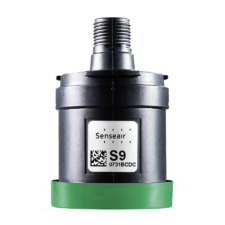
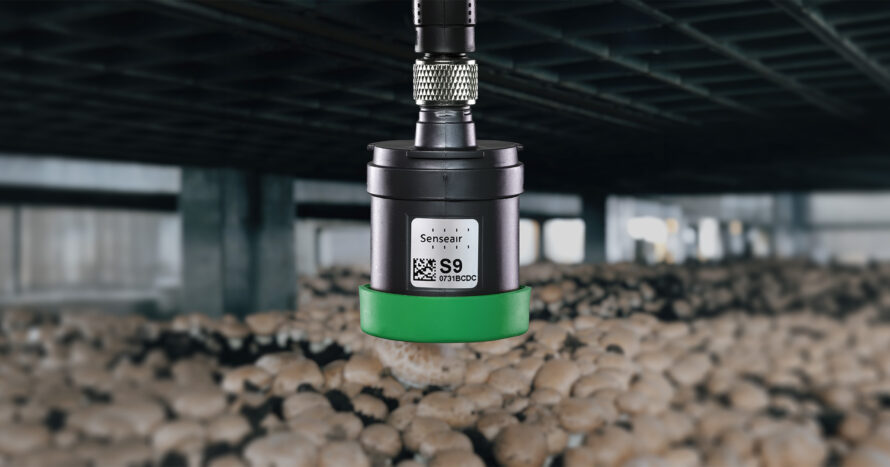
The CO₂ sensor has to work in that same humid environment. We designed S9 CO₂ 2% around NDIR (non-dispersive infrared) technology, with a housing that protects the electronics and a replaceable outer-filter cover to make servicing straightforward.
Different mushrooms need different CO₂ levels
In oyster mushrooms, excessive CO₂ during fruiting can lead to elongated stems and small, poorly developed caps. You need enough fresh air to support the shape and quality of the crop.
With button mushrooms, lowering CO₂ at the right point helps initiate pinning, when young mushrooms begin to form. The timing of that change, together with temperature and moisture management, affects how the crop develops.
King oyster mushrooms have their own requirements. CO₂ influences cap development, and controlled cultivation can use higher concentrations than those typically used for other oyster mushrooms. Your ventilation programme needs to follow the species, strain and stage of growth.
Connecting S9 to your ventilation controller
S9 measures from 0 to 20 000 ppm CO₂, so your system can track concentrations as they rise above the normal growing setpoint. We calibrate each sensor individually before delivery.
Its linear 0–5 V output corresponds to 0–20 000 ppm and connects to compatible controllers or PLC analogue inputs. You can use that feedback alongside temperature and humidity measurements to adjust ventilation as growing conditions change.
CO₂ sensing in humid growing rooms
The humidity mushrooms need also creates a demanding environment for the equipment around them. We have enclosed S9 in a protective housing and encapsulated its electronics in epoxy to help keep moisture away from sensitive components. We have also included an internal heating element to prevent condensation inside the sensor.
Cleaning between growing cycles needs to be practical, too. S9 has a dedicated protective cover that you fit before cleaning. With this cover fitted, the sensor has IP65 protection. Our installation instructions explain how to use it during cleaning.
Keeping S9 in service
Long-term use also means being able to deal with damage when it occurs. If the outer filter is damaged, you can replace the cover that carries it. If the inner filter is damaged, the sensor itself needs replacing.
We made S9 removable without disturbing the installed cabling or mounting bracket, so replacing a sensor does not mean redoing the installation. You keep the parts that are still doing their job.
We specify an expected lifetime of more than ten years. Periodic zero calibration and appropriate filter care are part of looking after S9 over that time, and our documentation explains the procedures.
Talk to our engineers about your growing system and the conditions it needs to handle. We can help you assess how S9 CO₂ 2% fits your design.