Dual Technology
True NDIR for environments where fresh-air baselines cannot be assumed
Hospitals, nursing homes, control rooms and other 24/7 occupied environments have people present around the clock. In these environments, CO₂ levels do not reliably fall back to outdoor background levels. ABC cannot be relied on, because the sensor is not given a dependable baseline to calibrate against.
That makes long-term sensor stability critical.
This gives Senseair sensors a shorter disturbance chain, a more direct reference signal and a stronger foundation for long-term CO₂ measurement stability.
This is a massive shift.
Dual Technology strengthens the stability architecture inside Senseair true NDIR technology. It adds a more direct way to monitor and compensate for light source behaviour over time, supporting dependable CO₂ measurement in environments where automatic background calibration cannot be trusted as the stability mechanism.
Why it matters
CO₂ measurement is becoming central to indoor air quality, ventilation control and building performance.
Modern IAQ applications need sensors that can support current and future building standards, including ANSI/ASHRAE 62.1, RESET, WELL and Title 24. That means CO₂ data must be dependable not only at installation, but throughout the operational lifetime of the product.
For more than 30 years, Senseair has developed NDIR gas sensing technology for applications where accuracy, stability and long-term performance matter. Dual Technology continues that work by refining the NDIR architecture itself.
Senseair is making true NDIR even more stable and even more dependable for the next generation of IAQ products, building systems and measurement platforms.
Now let’s break it down.
A more controlled reference signal
Traditional dual-beam NDIR uses a separate reference approach to support drift compensation. The principle is useful, but the execution decides the result.
Senseair Dual Technology takes a more integrated approach to long-term stability. Rather than relying on a conventional reference architecture, it reduces unnecessary sources of variation in the stability chain.
This gives Senseair better control over long-term sensor behaviour and strengthens the foundation for dependable CO₂ measurement.
The result is solid-state NDIR sensing with a stronger stability architecture, supporting applications where performance needs to hold over time.
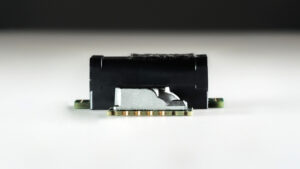
From Sunrise DT to S12 CO₂ DT
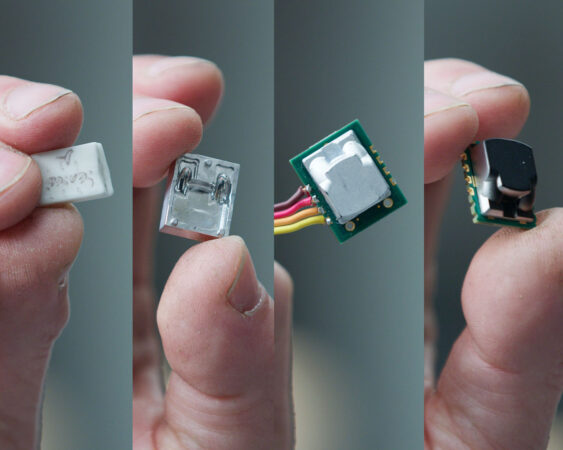
Senseair Sunrise DT and Senseair S12 CO₂ DT are made for places where CO₂ data has to stay trustworthy over time.
Think hospitals, nursing homes, control rooms and other spaces that are occupied around the clock. In these environments, the sensor cannot depend on the room regularly returning to a fresh-air baseline. That is where Dual Technology has its clearest role: long-term stability for true NDIR CO₂ sensing in permanently occupied environments.
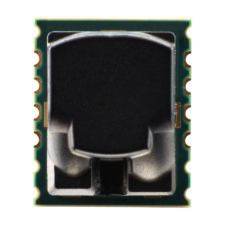
Senseair Sunrise DT brings Dual Technology into the Sunrise platform, with very low power consumption, true NDIR measurement and a design proven in the field. It is built for indoor air quality monitoring and demand-controlled ventilation where dependable measurement and modern building standards matter.
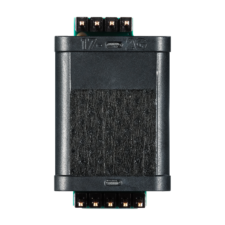
Senseair S12 CO₂ DT brings the same stability-focused thinking into the S12 CO₂ platform. It is for products where CO₂ sensing needs to be accurate, power efficient and easy to place, while still meeting the expectations of 24/7 occupied environments.
Together, Sunrise DT and S12 CO₂ DT show what Dual Technology is really about. Not miniaturisation. Not a shortcut. A more dependable way to keep true NDIR CO₂ measurement stable over time, especially in the spaces where trusted IAQ data matters most.
Where trusted CO₂ data matters
Dual Technology is relevant wherever CO₂ data is used to make decisions.
In building automation, it supports stable measurement for demand-controlled ventilation and indoor air quality monitoring. In compact connected products, it supports true NDIR integration where long-term measurement confidence is important. In research and measurement platforms, it provides a dependable optical foundation for long-term gas sensing applications.
If CO₂ data is part of the product’s intelligence, the sensor must be built to support that intelligence for years.
Senseair NDIR, refined
Dual Technology is Senseair applying more than 30 years of NDIR experience to the next generation of CO₂ sensing.
By combining solid-state IR components, optical SMD precision, a direct integrated reference signal and deep NDIR know-how, Senseair continues to develop CO₂ sensors for the standards, products and applications coming next.
Long-term stability. Low power. Dependable measurement. Easier integration.
The answer remains true NDIR.
Senseair continues to lead.